
Klotski
Tacchini All Products - Dining Chairs
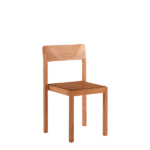
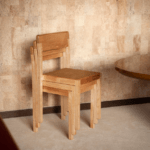
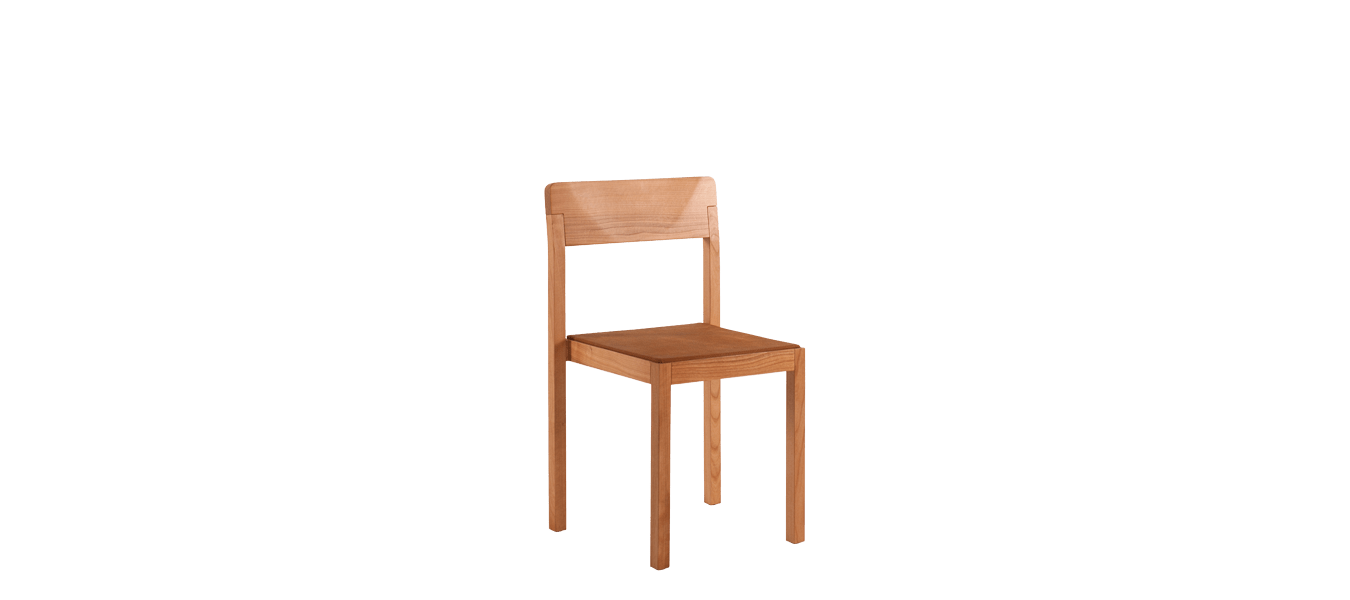
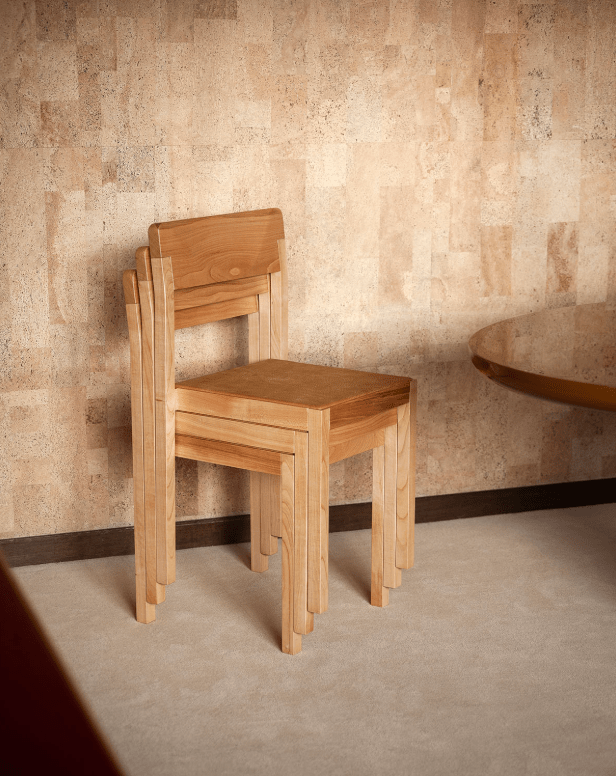
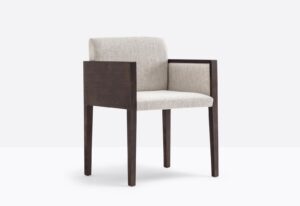
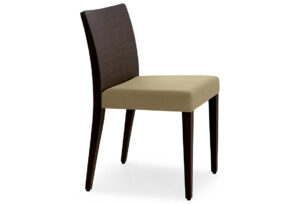
Michael Anastassiades designs Klotski for Tacchini, a chair that embodies simplicity as its essence. The name refers to a hypothetical layout of a series of wooden blocks, similar to that of sliding-block puzzles where the aim is to move a specific block to some predefined location. The back appears as if a section has been slid and lifted up from below, starting exactly where the armrests finish — appearing as if balancing on the edges. It is positioned at a slight tilt and with a scooped geometric section on its upper part; subtle gestures to provide comfort while not deviating from the strict appearance. The armless version of the chair shares a similar aesthetic. It is stackable and slightly smaller in size. The upholstered seat on both versions sits within a thin wooden frame and is padded for further comfort. Behind its seemingly simple construction lies a play of geometries, angles, and lines that ensure the product’s longevity – an attribute that, according to the designer, is the greatest achievement of an object. “The starting point was creating a chair that looks and feels utilitarian but introduces a level of sophistication to an everyday product, elevating it and giving the chair a completely different experience.” It is made either in cherry, with a warm, red undertone and a straight grain that highlights the careful geometry of the chair, or a monochrome matt green painted version that emphasises the simplicity and refinement.




About Tacchini
The design is Italian, the rest is production. And in Italy, design companies bear the names of the families that founded the brands. Like Tacchini, created in 1965 by Antonio, when production, too, was almost entirely Italian, and the most poetic and soul stirring passages in the story of design were written. Naturally in time the children became the heirs, and the new founders, in a rational of continuous updating and redefinition of the underlying idea, and that is what is actually handed down. Equally...
Learn More